
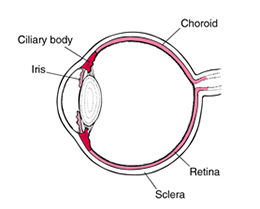
The uvea is a part of the eye, made up of the iris, ciliary body and choroid.
Uveitis is when any part of the uvea is inflamed. Uveitis can cause visual loss by a variety of ways, including swelling of the nerves in the retina. Patients with uveitis also frequently get cataract and glaucoma as a result.
A doctor can see inflammation in the eye using a microscope, (there are abnormal floating cells).
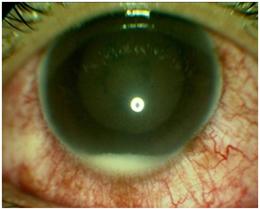
Iritis, when specifically the iris is inflamed, is the most common type of uveitis.
Patients with iritis have redness, and are often bothered by light.
Most people with uveitis are in fact otherwise healthy and do not have inflammation elsewhere in their body.
Uveitis can be caused by infection (germs) in the eye.
Herpes simplex and herpes zoster(shingles) are examples of this, as is Toxoplasmosis.
In some cases, uveitis is related to bodily autoimmune diseases, which the patient may or may not be aware of. We can test for these diseases if we suspect them. Sarcoidosis is probably the most common such illness causing uveitis.
Some people carry a gene, called HLA B27, that predisposes a person to having autoimmune diseases. These diseases include ankylosing spondylitis, psoriatic arthritis and some forms of ulcerative colitis and Crohn’s disease and uveitis commonly occurs in individuals with these problems.
Some patients require longer term treatment, and steroids may or may not be safe to use for long periods of time. These patients may benefit from treatment with immunomodulatory therapy. Common immunomodulatory drugs for uveitis are methotrexate, mycophenolate, and infliximab, cyclosporine, and azathioprine.
Patients should know that uveitis is an “orphan disease,” meaning that most of its treatments are “off label” and have not been evaluated by the US Food and Drug Administration (FDA). (The disease is simply too rare to attract investment by companies that produce medications.)
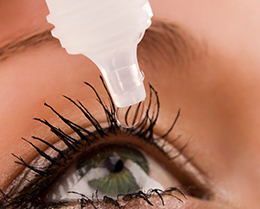
Short term treatment for uveitis usually involves corticosteroid (or simply “steroid”) medications.
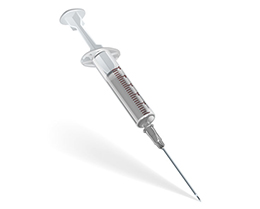
Steroids can be given as eyedrops, in pill form, or as injections in or around the eyeball.
© 2026 Eye Disease Consultants, LLC.