
The sclera is the white, leathery outer “shell” of the eyeball.
Most scleritis is visible and obvious, because the eye is red, often with a slightly magenta hue.
Scleritis is painful and the eye is often quite tender.
Sometimes the inflammation is localized to one part of the sclera.
Scleritis can cause visual loss by damaging the structures on the inside of the eye, and because it weakens the sclera, changing the shape of the eyeball.
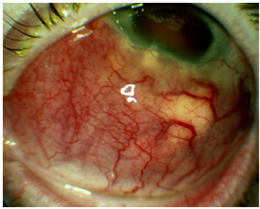
Scleritisis when any part of the sclera is inflamed.
While probably most people with scleritis are otherwise healthy, a substantial percentage (at least 30%) will have evidence of abnormalities in their immune system. Many patients who present with scleritis are being treated for autoimmune diseases such as rheumatoid arthritis and lupus.

In some cases, scleritis can be the first sign of such an illness. These patients generally have disease symptoms and feel unwell. It is important that patients with scleritis undergo blood tests for immune system abnormalities.

Many patients with scleritis will have abnormal blood tests but not have–and may never get–an actual disease. These patients benefit from regular monitoring.
Nonsteroidal anti-inflammatory drugs (like ibuprofen or naproxen) are effective in some cases.
If scleritis occurs in patients with known autoimmune diseases, then treatment is directed at the underlying disease.
Corticosteroids (prednisone) are used in other cases, either as pills or as injections around the eye.
Immunomodulatory therapy is used in some patients who require long term therapy.

© 2026 Eye Disease Consultants, LLC.